An obsession
For eleven months I’ve been obsessed with a single building. Sleepless nights, anxiety, anticipation, dreams, even nightmares. It’s a little ridiculous…probably neurotic. But wow, this one is special.
Old buildings can be so frustrating. It would be so much easier to tear them down and start from scratch, and many do. But no matter how creepy or dilapidated, I always find there’s something amazing about walking within old walls.
I’ve never purchased a “new” property— they’re always broken and in need of desperate help. Most look like they could be straight out of a “Saw” horror movie. My family and friends usually think I’m crazy if they see the buildings before work begins, and I don’t blame them…rodents, crumbling walls, standing water, broken beams, leaking roofs, and some of the worst insect infestations you could ever imagine…and whenever I think I’ve seen it all, the next ‘fixer-upper’ comes along.
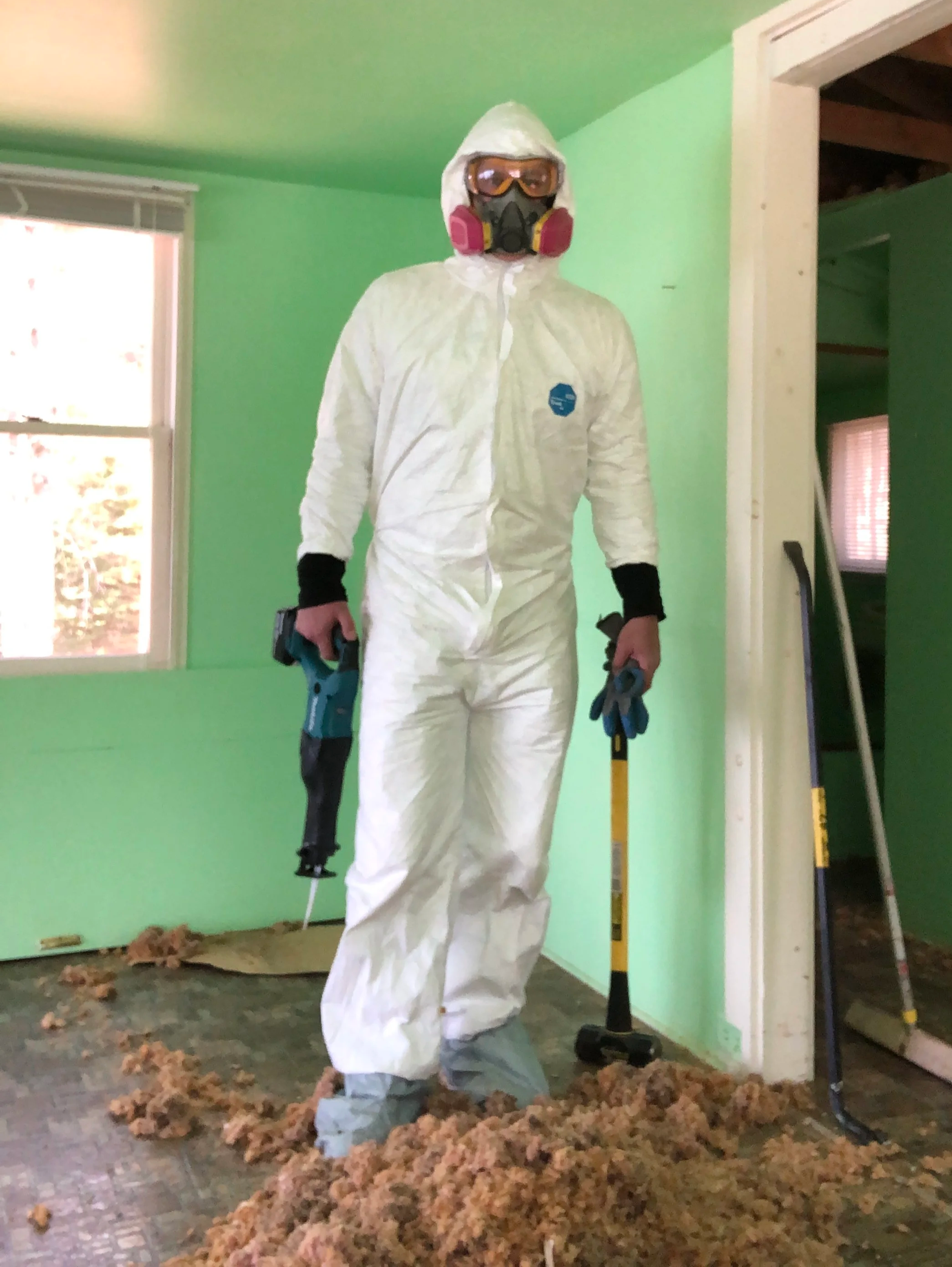
In one building, the tenants had sealed every kitchen cabinet and drain opening with duct tape to ‘contain’ the cockroaches. Another had hordes of mice and carpenter ants living together in perfect harmony within the walls. I don’t even know how these things are possible, but a hazmat suit and breathing respirator have become standard attire for any projects I crack into myself.
Despite their imperfections, when I walk through old buildings my imagination runs wild with what they were before and what they could become. I see old, rundown, beat-up vacant spaces filled with stories and memories - children’s sketches on a wall, an old family portrait, pots and pans that probably cooked hundreds of meals.
These are spaces that were once the pride and joy of their owners, and with a little attention and creativity, they could come alive again. And then there are some buildings - the really special ones - where I can actually feel their potential.
The idea of reimagining an old property has always been fascinating to me– figuring out the puzzle, learning obscure strategies that allow a project to ‘pencil’ out, blending new style with old character, seeing how art and design can bring an emotional connection to a neglected space, and, most importantly—witnessing the dramatic impact that thoughtful redevelopment can have on a neighborhood or city.
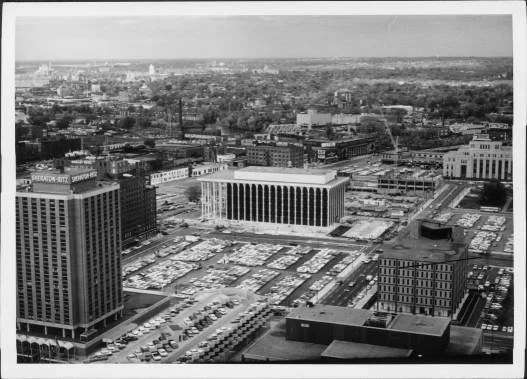
1963/64: Looking north from Marquette Ave. and 4th St / Sheraton-Ritz Hotel (left), 2o Washington (center), IBM Building (bottom right), Post Office (upper right), River Towers Condominiums under construction just north of 20 Washington. Source: Hennepin County Library Digital Collections
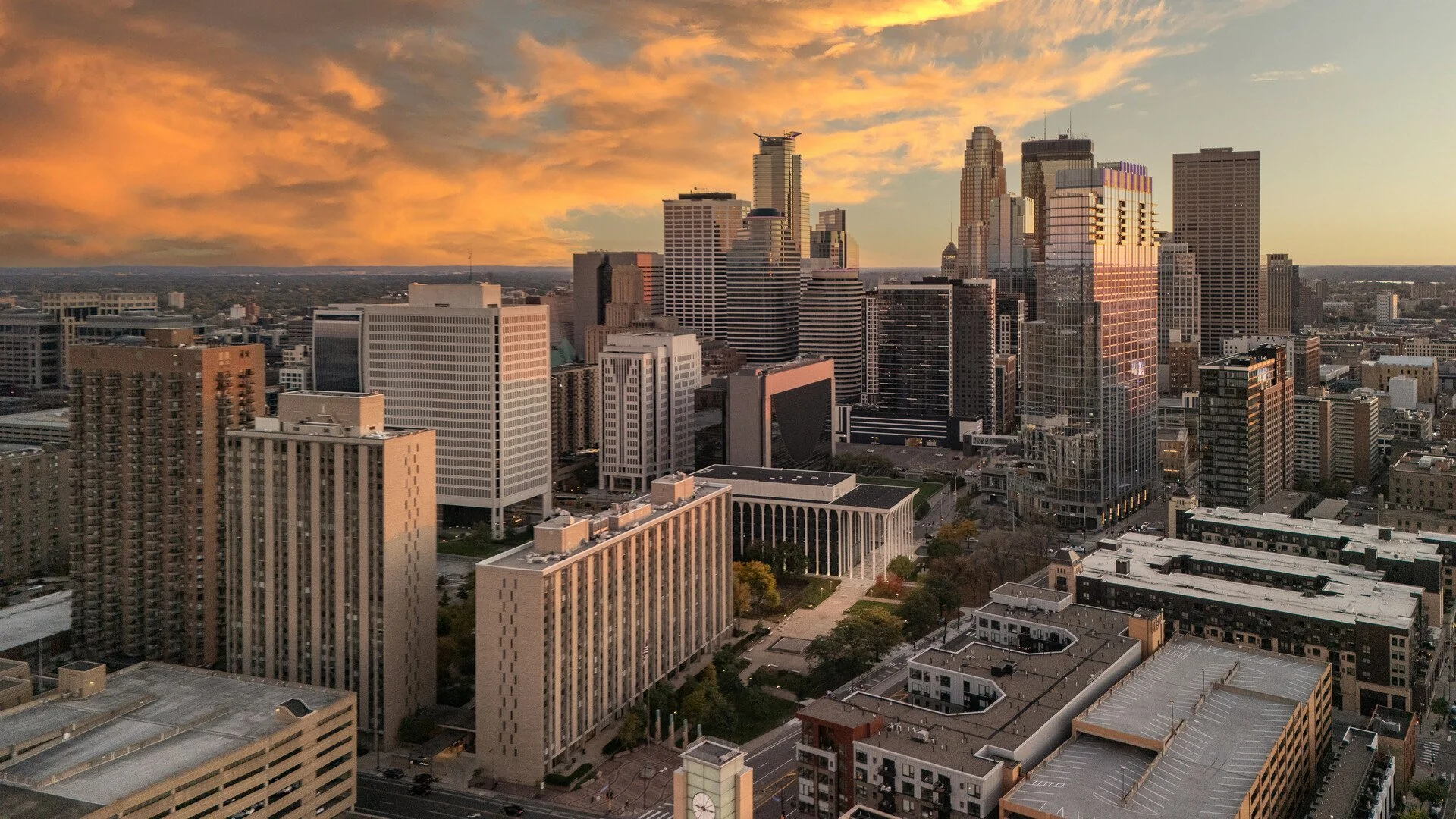
My obsession this past year was the property at 20 Washington Avenue South in the Gateway District of Minneapolis. For someone like me, in my ‘world’, it’s a dream. A completely vacant masterpiece anchoring the heart of downtown with a story and history you can’t help but fall in love with…and it’s just sitting there begging to be brought back to life. Better yet, it doesn’t even have termites.
I learned the building could be available to purchase back in January, and I figured it was at least worth calling the broker to ask a few questions and poke around. It was being offered for sale as part of a huge 4-building portfolio including two separate high-rise office towers and a 900-car parking ramp…way too much real estate for me and my little group to consider…BUT…the seller would look at offers on the buildings individually. I knew it was a long shot, but I couldn’t help myself…there was a small window of opportunity, this is an absolutely iconic building, and I had to go for it…what the hell. YOLO.
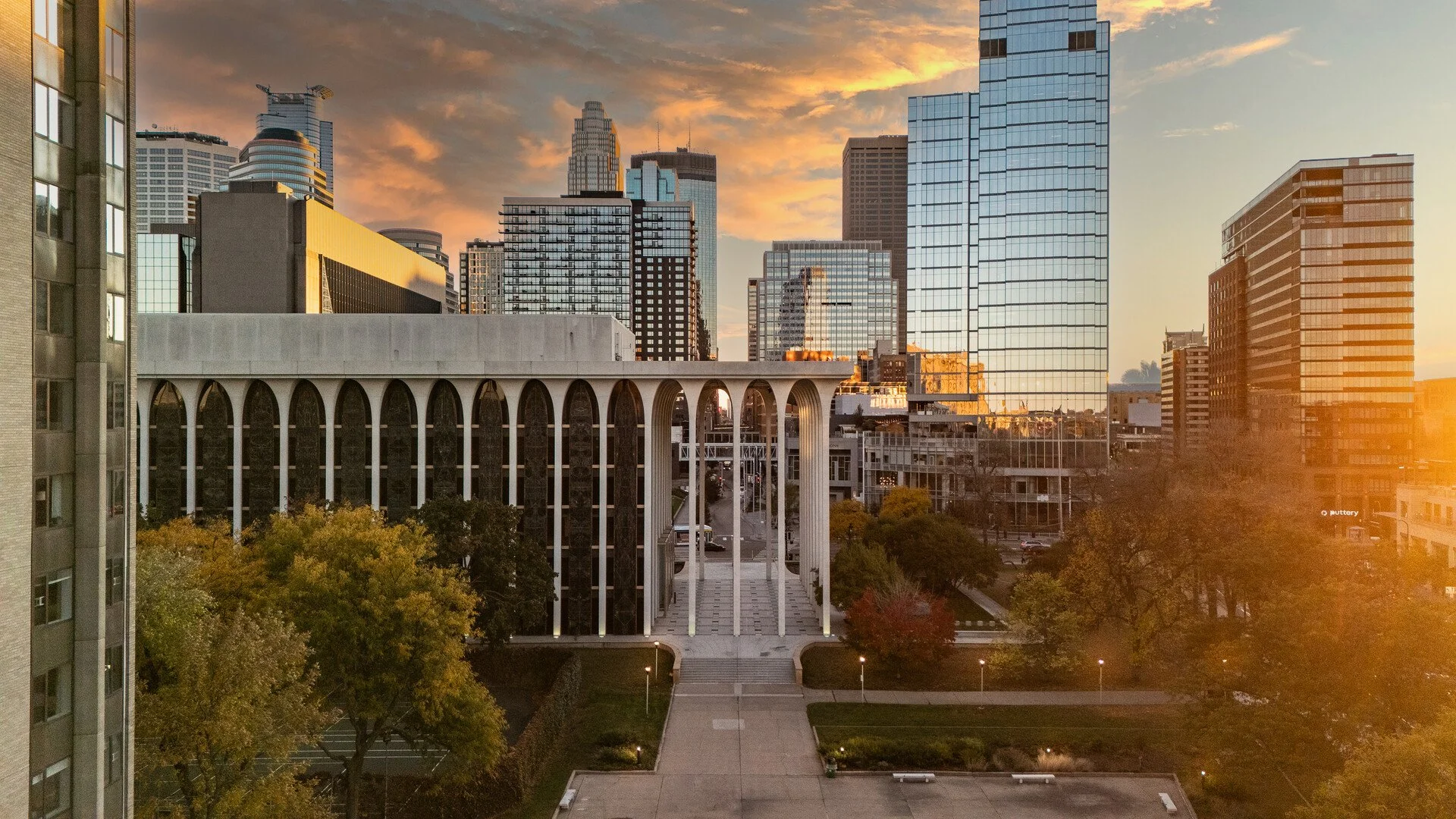
When the spark of an idea or plan starts becoming a real project and I see a pathway to making it happen, I’m hooked. I’m all in, and I’m gonna fight like hell to make it happen…and that’s how I would describe my 2025.
After running through a wide variety of scenarios for what this building could become, underwriting the financials and feasibility, talking to architects and experts from around the country, reading so many market and trend reports, I finally landed on a strategy that I loved. I only shared the vision and my emotional rollercoaster ride with close friends and family. Any large-scale real estate development is difficult to get done, but it’s worse right now— our political climate, rising costs, market and economic uncertainty…it’s all making the process even more challenging than usual.
There are a million ways these projects can fall apart before they begin, so I kept my circle of trust very tight…I didn’t want to explain a failure to a wide audience. It’s a big building and an ambitious plan, and anyone in real estate knows a lot can happen in 11 months. There are days I wonder why or how I get myself into these projects...costs are usually higher than expected, the risks are great, the timelines are excruciatingly long, and there are so many outside forces I can’t control that can have major impacts. But when it all comes together, it’s such a beautiful thing.
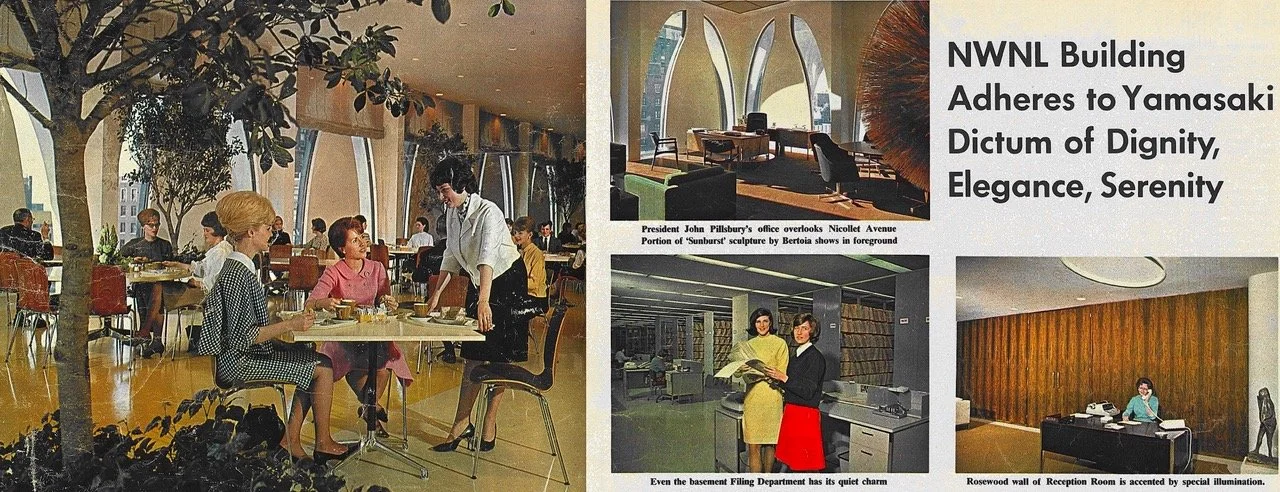
Picture Magazine / All photos within 20 Washington / Minneapolis Sunday Tribune / May 9, 1965
Our team spent thousands of hours working on it, and I spent a considerable amount of money and resources with absolutely no certainty of repayment. For every 100 calls I made to banks, investors, or possible partners, 95 didn’t understand it or weren’t interested, but the 5 who did loved it. Experts from around the country offered their opinions and time, often free of charge. I felt a deep loyalty to those who helped, and I felt a commitment to perform on the plan I had laid out. I put a lot on the line and I couldn’t imagine the idea of telling a single person that it all fell apart.
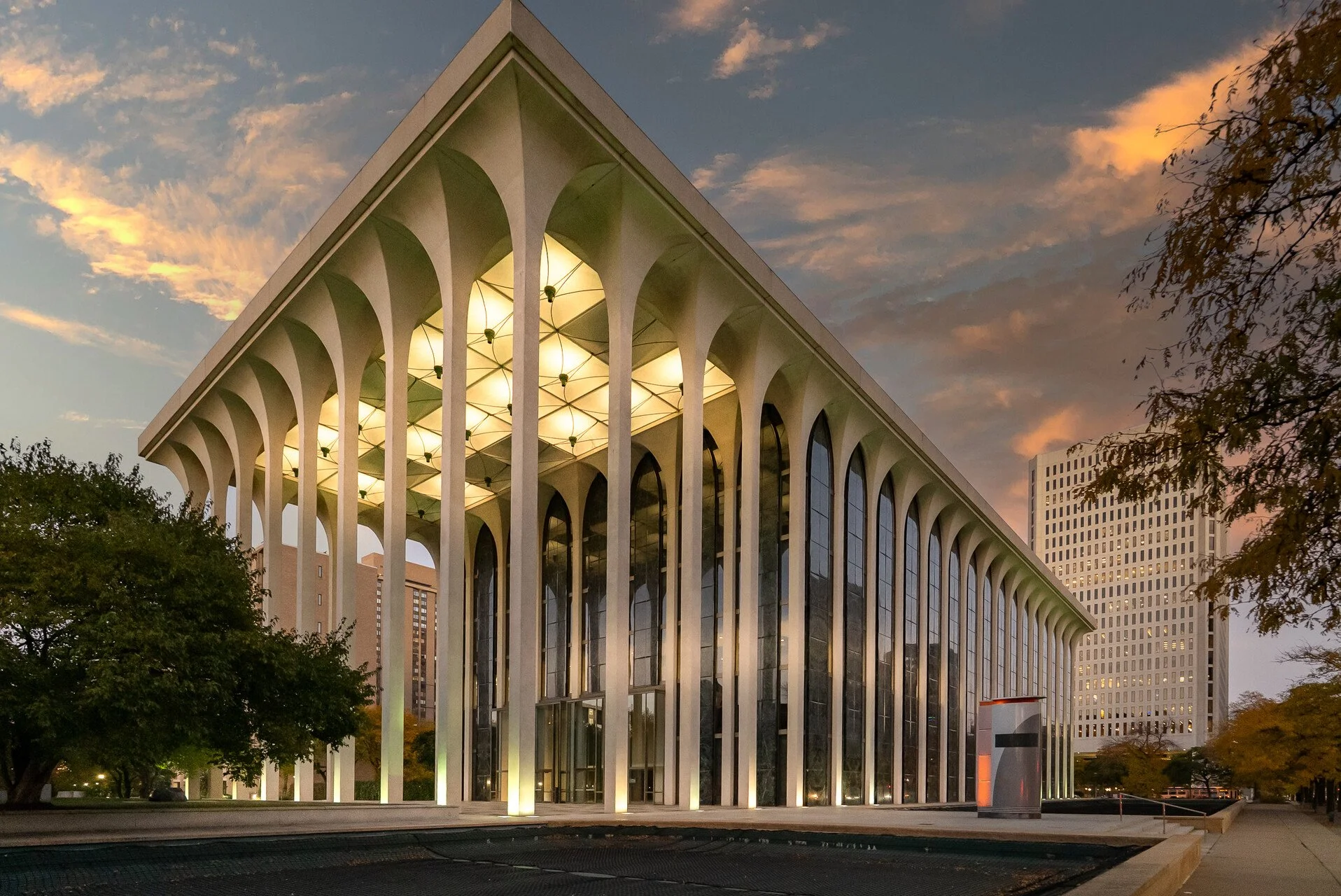
Fortunately, we crossed our first big hurdle in a long journey. Three weeks ago I, along with a small group of investors, closed on the purchase of this remarkable property after 60 years of ownership by some of the largest and most prestigious companies in the world. Now we’re planning its revival, and it’s really f&%king exciting.
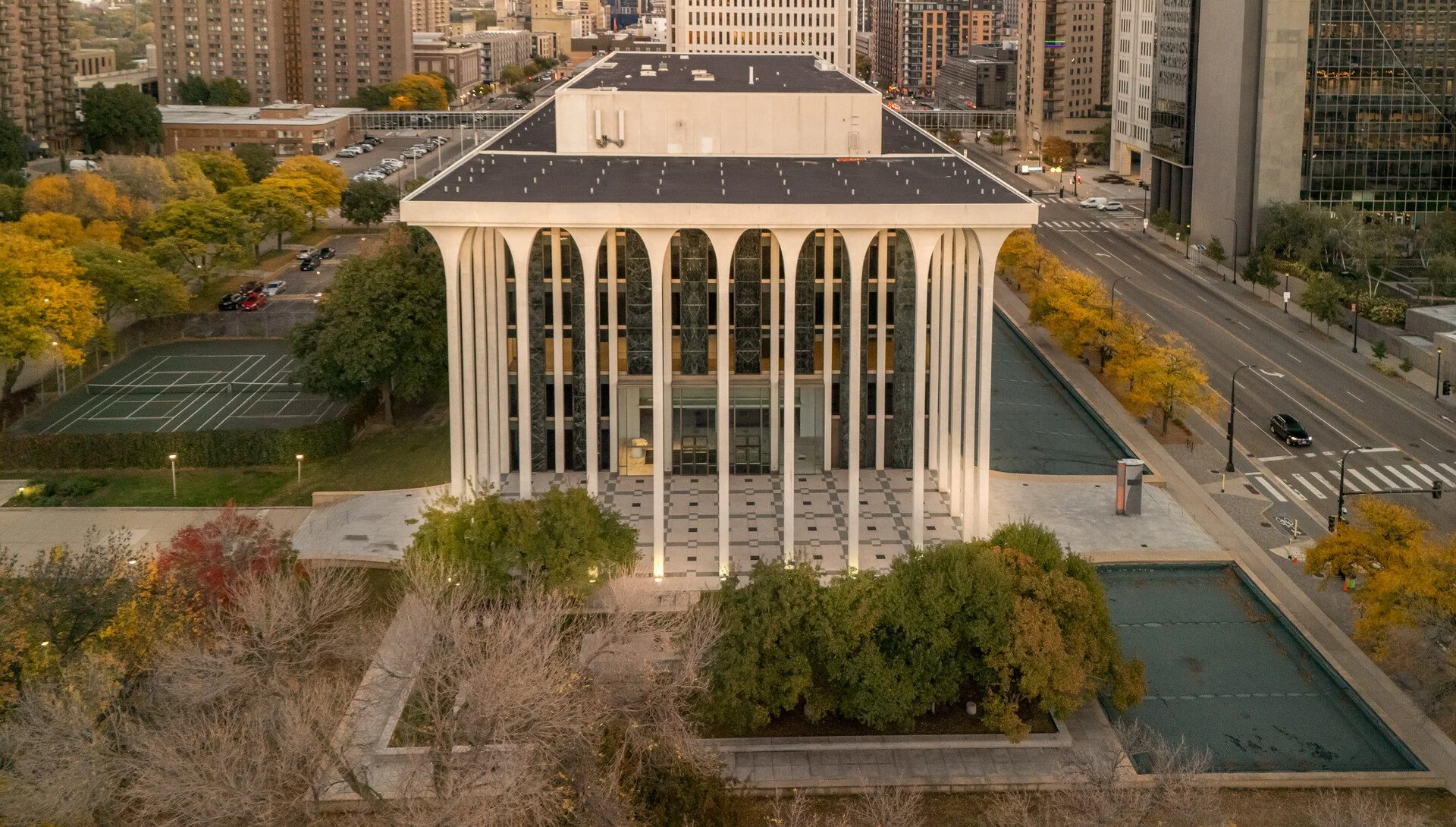
20 Washington is located at one of the busiest intersections in Minneapolis – Hennepin and Washington Avenues. It’s been a visual anchor of downtown since it was built in 1965, and despite its size and commanding presence, its striking design somehow radiates a unique vibe of urban serenity and graceful distinction. Over 40,000 vehicles pass the property each day, and I wonder how many of them feel the same reaction that I do each time I pass it. I remember very few structures from my childhood, but this is one of them.
Most who have visited or lived in Minneapolis would recognize it, and for 60 years it’s been an office building—off limits to the public. Over many years, as the city has been built up around it, it continues to stand as a mysterious timepiece and a symbol of urban renewal. Few people have ever walked inside, and most are unaware of its incredible history.
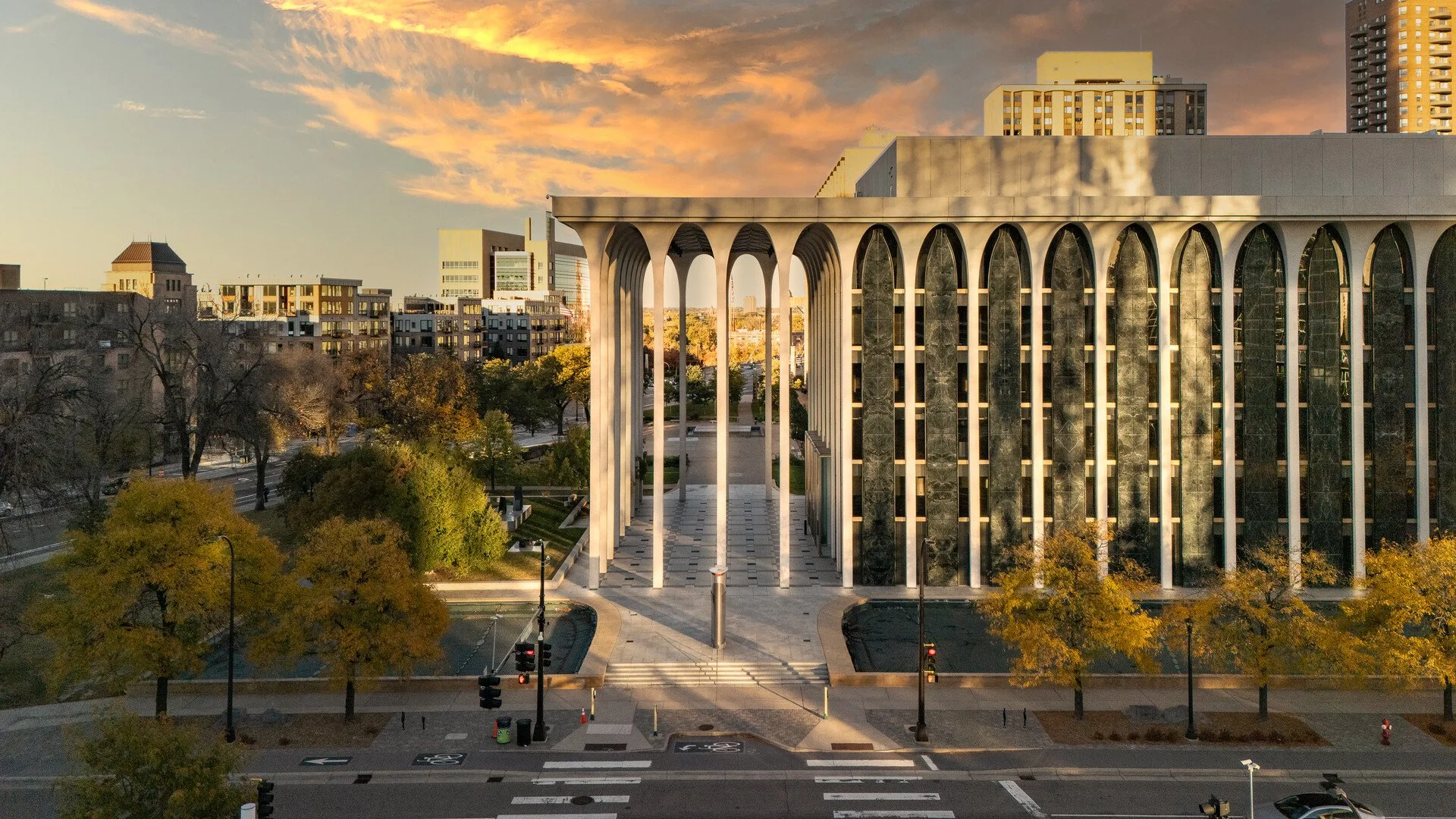
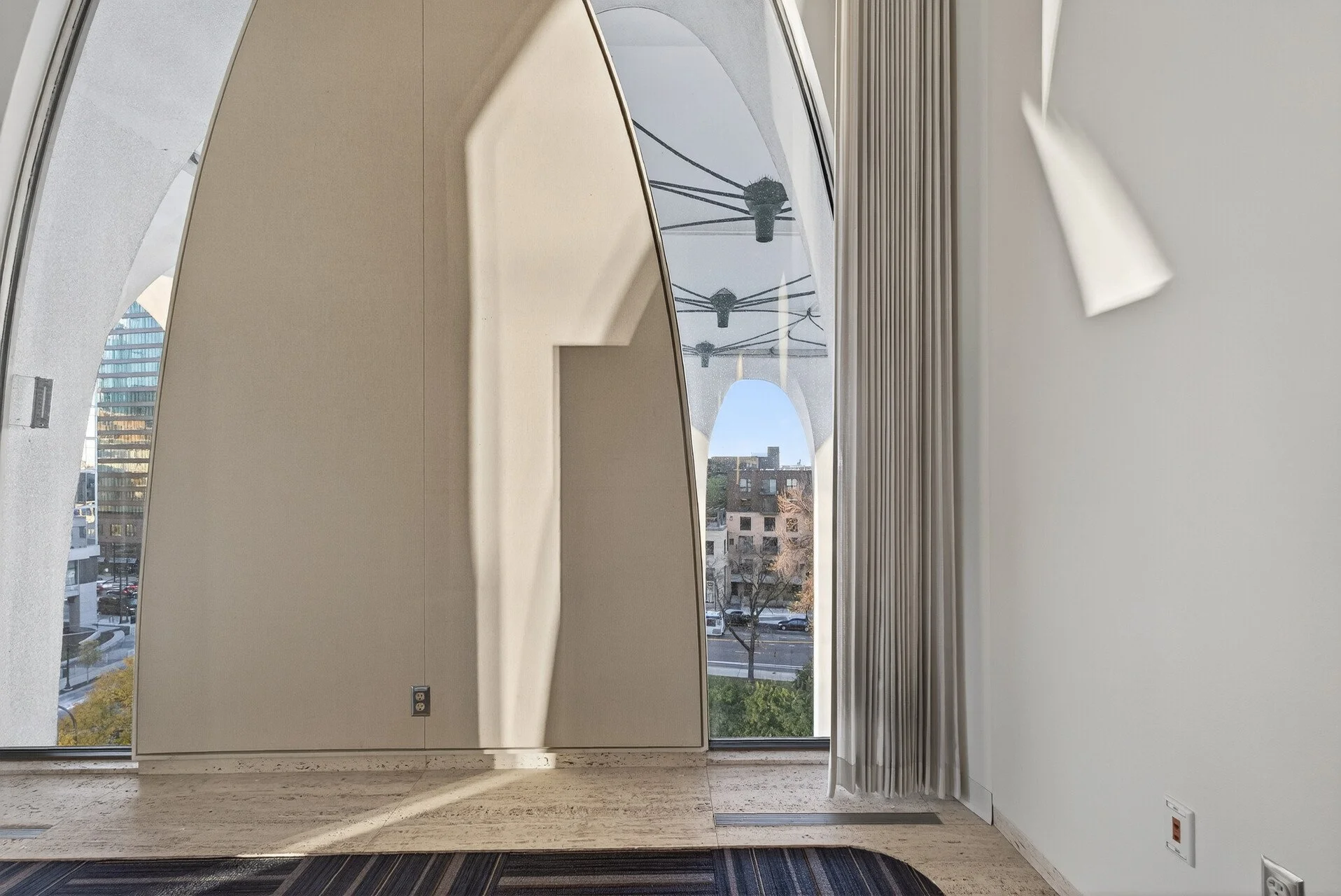
Surrounded by two enormous reflective pools (the largest water features in all of Minneapolis), an elevated sculpture garden, and over 2 acres of parkways and trees, the site appears almost too pristine for an urban business core. Towering 85 feet above the sidewalks below, 63 identical quartz-concrete columns rise and terminate in repetitive Gothic-style arches that form the structural perimeter of a 220,000 square foot building. Fifteen of the columns support a massive overhanging concrete portico (or colonnade, or as a close friend describes it more simply – “it’s like a huge floating deck in the sky”). The portico was designed to form a visual connection between the Hennepin Avenue Bridge/Gateway Park (to the north) and the Nicollet Mall business district (to the south).
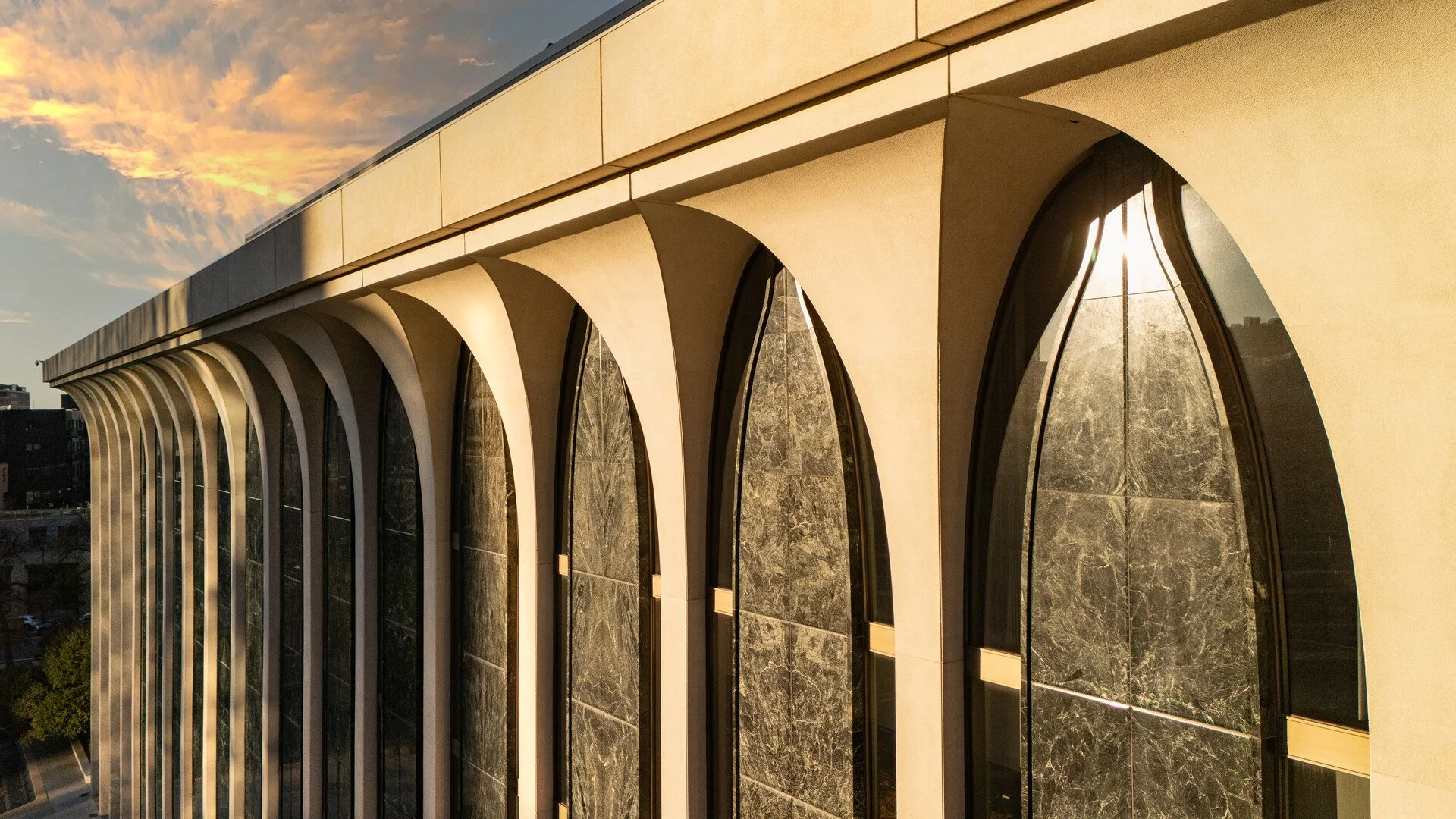
Over 400 tons of beautifully detailed Vermont verde antique serpentine marble rise between the building’s columns, each set in a book-leaf pattern seven feet wide by 85 feet tall with 30 inches of tinted glass on either side. Blurring the lines between architecture and art, it’s a fascinating structure…a “monument within a park.” Like many of the world’s great sites, it’s one thing to read about it, and another to see photographs, but physically visiting and seeing the property is an experience. It’s simply irreplaceable.
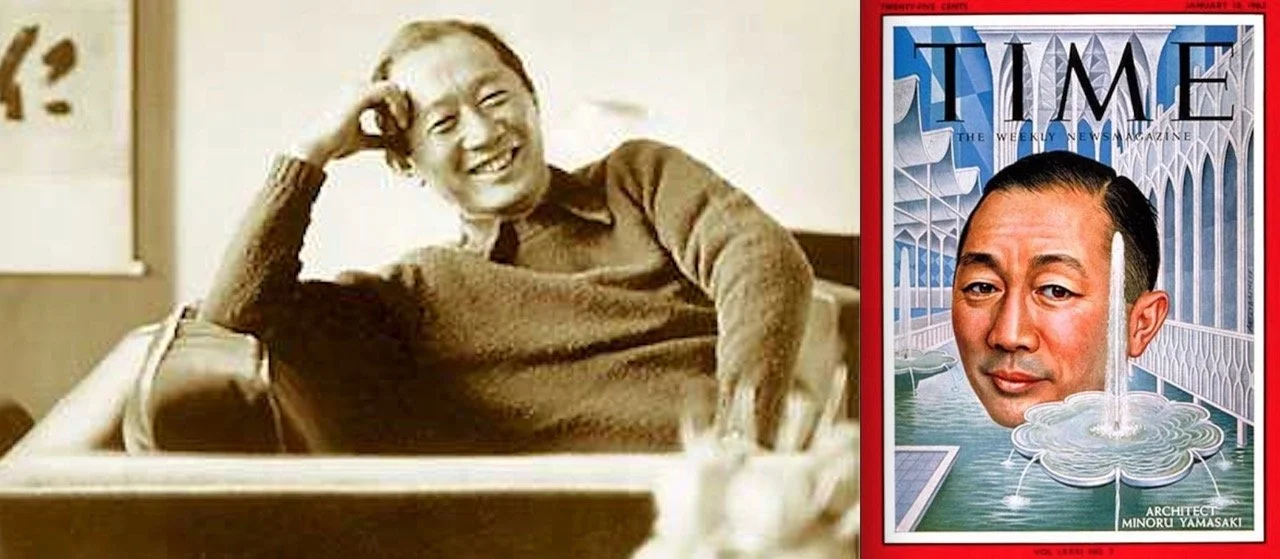
Minoru Yamasaki / Time Magazine - January 18, 1963
20 Washington is the masterful creation of world-renowned architect Minoru Yamasaki. A pioneering visionary in design throughout the mid to late 20th century, Yamasaki is most widely known as the architect behind the former World Trade Center towers in New York City, but his unapologetically unique work spans over 200 projects in countries across the globe. Yamasaki’s talent was extraordinary and his life story is wildly inspiring. It’s a remarkable honor that his work still stands today within our city, and I am so thrilled that our project will play a small part in helping to keep his name and legacy alive.
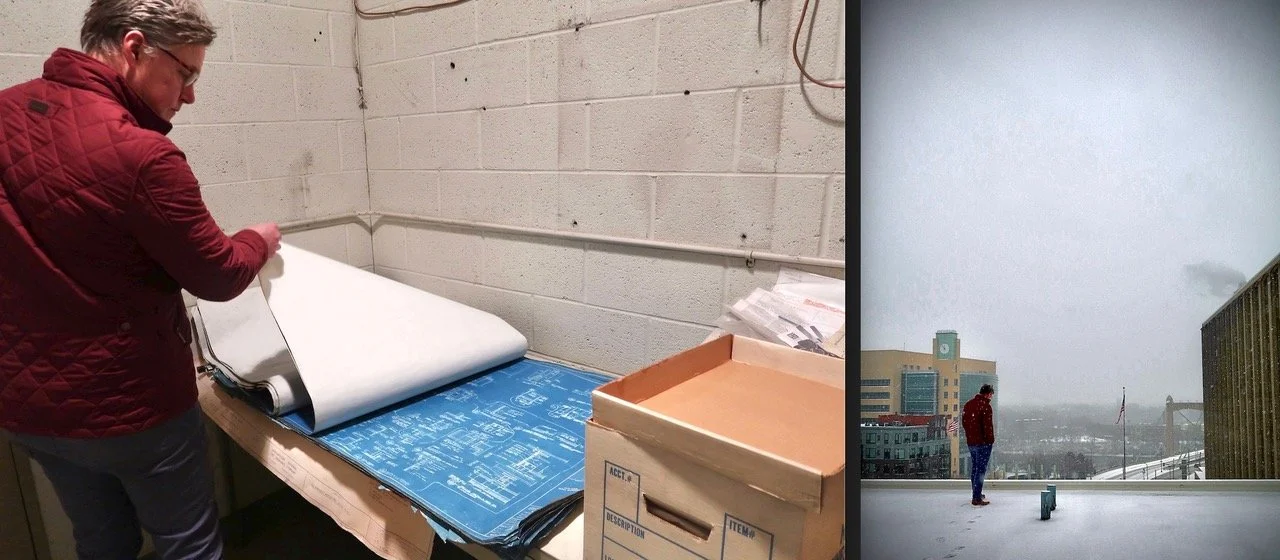
Original Minoru Yamasaki blueprints, 1963 / View from the roof facing the Hennepin Avenue Bridge
The more I have learned about Yamaski, his legacy, and the stories surrounding his creation at 20 Washington, the hungrier I am to keep digging. There are so many fascinating story lines, bits of history, personal connections to the property and its location. I would never have imagined I might have the opportunity to play a part in the next phase of this extraordinary property, but it’s happening. What comes next, I hope, will become a symbol of downtown Minneapolis’ next great renaissance.
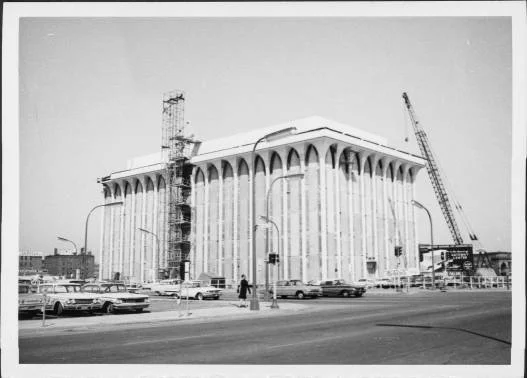
1964: 20 Washington under construction. Source: Hennepin County Library Digital Collection